
Supporting Mental Health, Supporting Stability
Mental Health Awareness Month is an important opportunity to recognize how closely mental health and housing stability are connected.
At CaringWorks, behavioral health services are a critical part of our broader support system that helps individuals move out of homelessness and build long-term stability across multiple areas of life. In 2025, 74% of CaringWorks clients received behavioral health services either through CaringWorks or through partnerships with other providers. Our coordinated approach to housing, behavioral health, and supportive services works: In client surveys, 97% of CaringWorks clients reported that services helped them better manage the challenges they were facing, and year after year, more than 90% of our clients remain stably housed.
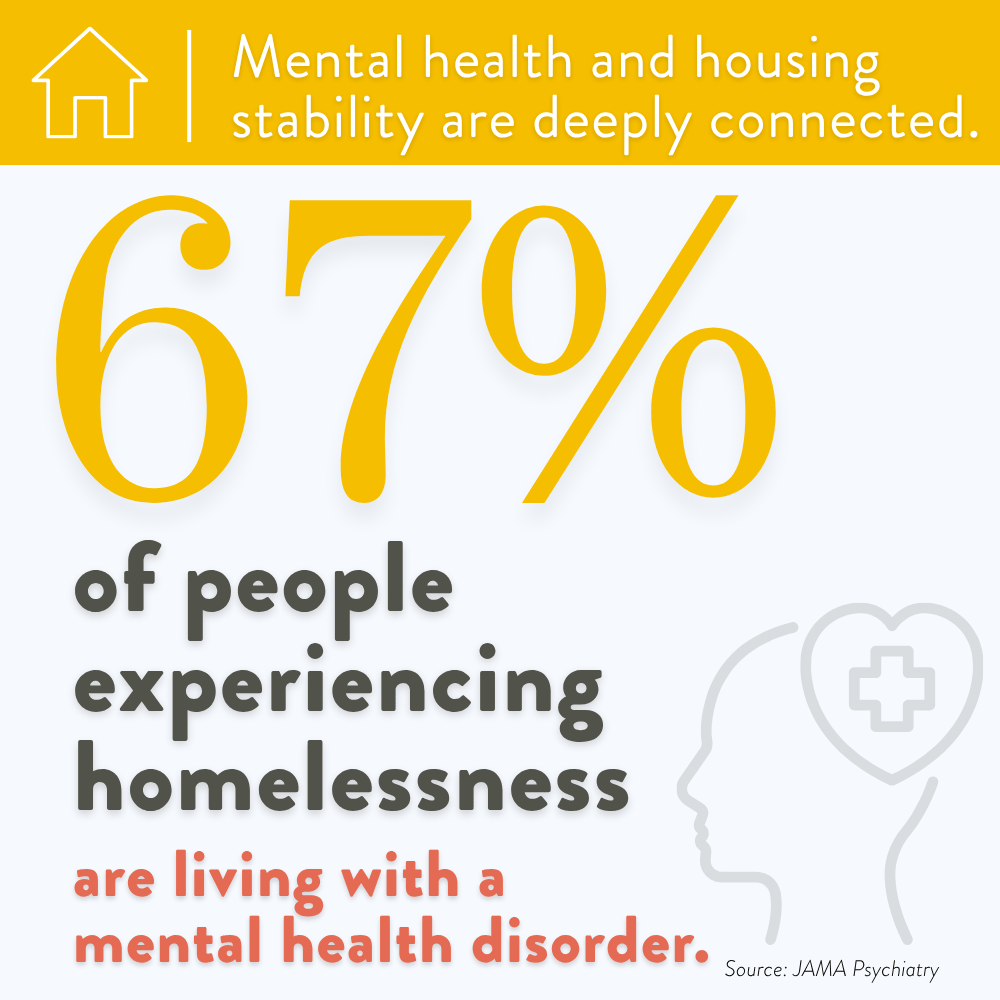
As homelessness rises, so too does the need for both housing and behavioral health support. According to the U.S. Department of Housing and Urban Development’s 2024 annual homelessness assessment report, more than 771,000 people experienced homelessness on a single night in the United States, the highest ever recorded.¹ Research also estimates that approximately 67% of people experiencing homelessness are living with a mental health disorder². This is compared to 23% of U.S. adults who experience mental illness annually², highlighting the disproportionate burden among people experiencing homelessness.
At the same time, research challenges a common misconception about homelessness. While mental health conditions are more common among people experiencing homelessness, severe mental illness is not the primary driver for most individuals. Studies show that about 25–30% of people experiencing homelessness have a severe mental illness such as schizophrenia³, while many others are living with conditions such as anxiety, depression, trauma-related disorders, or substance use disorders that may improve with access to care, housing, and support services.
Homelessness is a deeply complex issue tied to a combination of factors, including rising housing costs, economic instability, trauma, untreated behavioral health needs, and gaps in healthcare access. Mental health challenges can affect employment, relationships, physical health, and the ability to maintain stable housing. At the same time, homelessness itself can increase stress, anxiety, depression, and trauma, creating a cycle that can be difficult to break without support.
This is why access to coordinated support services matters. Stable housing alone is often not enough. Many individuals also need access to behavioral health services, recovery support, case management, and community resources that address the broader challenges affecting long-term stability and well-being. When people have access to both housing and support services like those we offer at CaringWorks, they are better positioned to manage challenges, maintain housing, improve their health, and remain connected to their communities.
Mental Health Awareness Month is also an important reminder to support the people doing this work every day. Professionals across housing, behavioral health, and social services often experience high levels of stress and burnout because of the emotional demands of the work and the growing needs within communities. Supporting mental health must include not only individuals receiving services, but also the workforce helping make those services possible.
At CaringWorks, we believe addressing homelessness requires more than housing alone. It requires continued investment in behavioral health services, supportive care, and the people working every day to help individuals build stability and move forward.
Sources:
- U.S. Department of Housing and Urban Development, 2024 Annual Homelessness Assessment Report (AHAR)
- JAMA Psychiatry, “The Prevalence of Mental Disorders Among People Experiencing Homelessness”
- National Library of Medicine, “Homelessness, Housing Instability and Mental Health”
Help more people break the cycle of homelessness.
About CaringWorks:
Built on the single idea that all people—no matter their social or economic standing—should have a chance to improve their quality of life, CaringWorks has served thousands of clients since our inception in 2002. Since then we have grown exponentially to become one of Georgia’s leaders in providing permanent supportive housing. We serve hundreds of individuals each year through unique programs and services that are specifically tailored to the needs of those facing chronic homelessness.
Donate today to help us end homelessness.
May 2026